Specifying a car wash system is a commercial decision before it is a technical one. Throughput and price point come first; the machine follows.
Touchless washing has one hard constraint: with no mechanical agitation, water pressure and chemistry have to do all the work. Whether that succeeds depends far less on the machine than on how well the chemistry is matched to it.
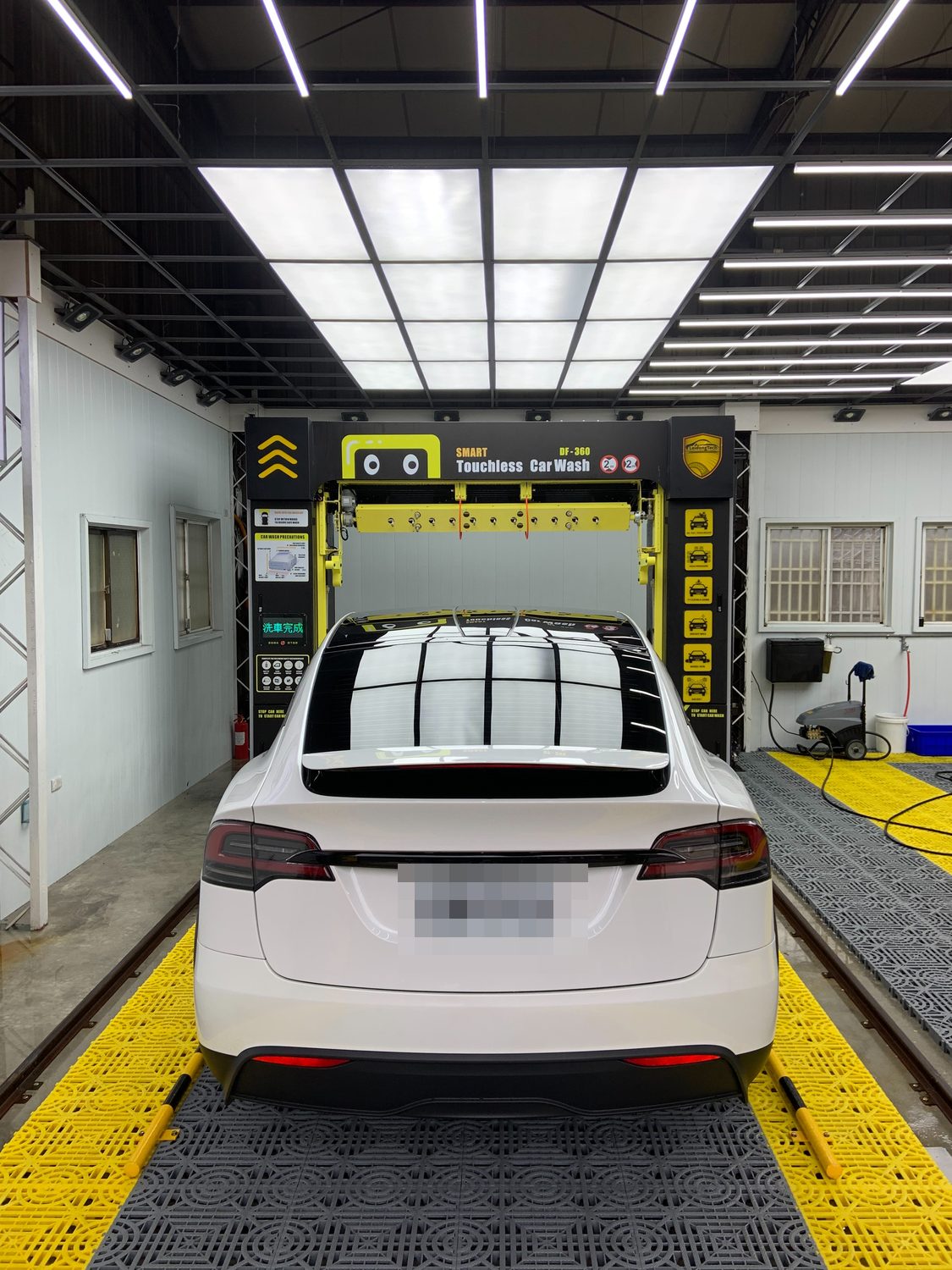
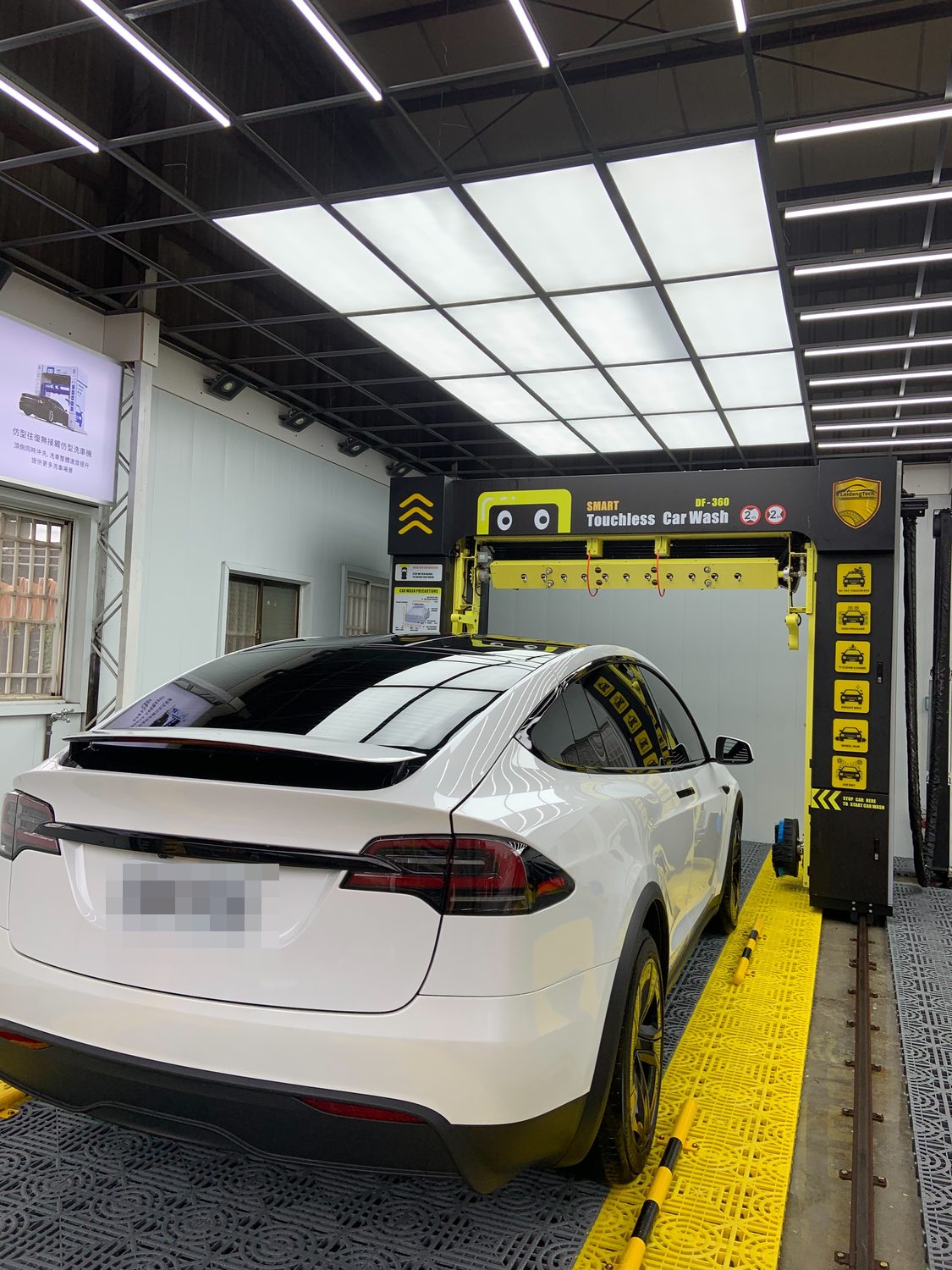
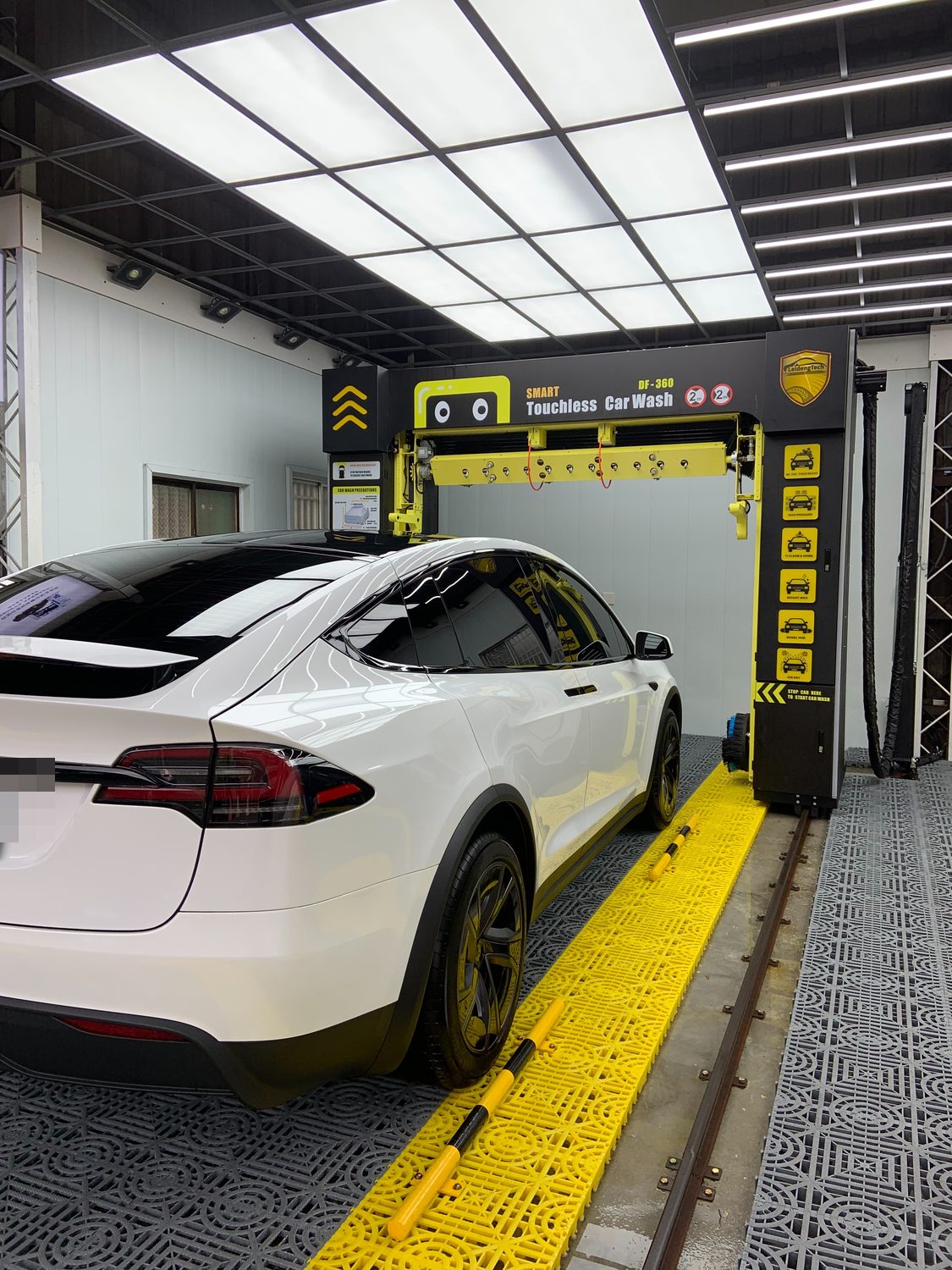
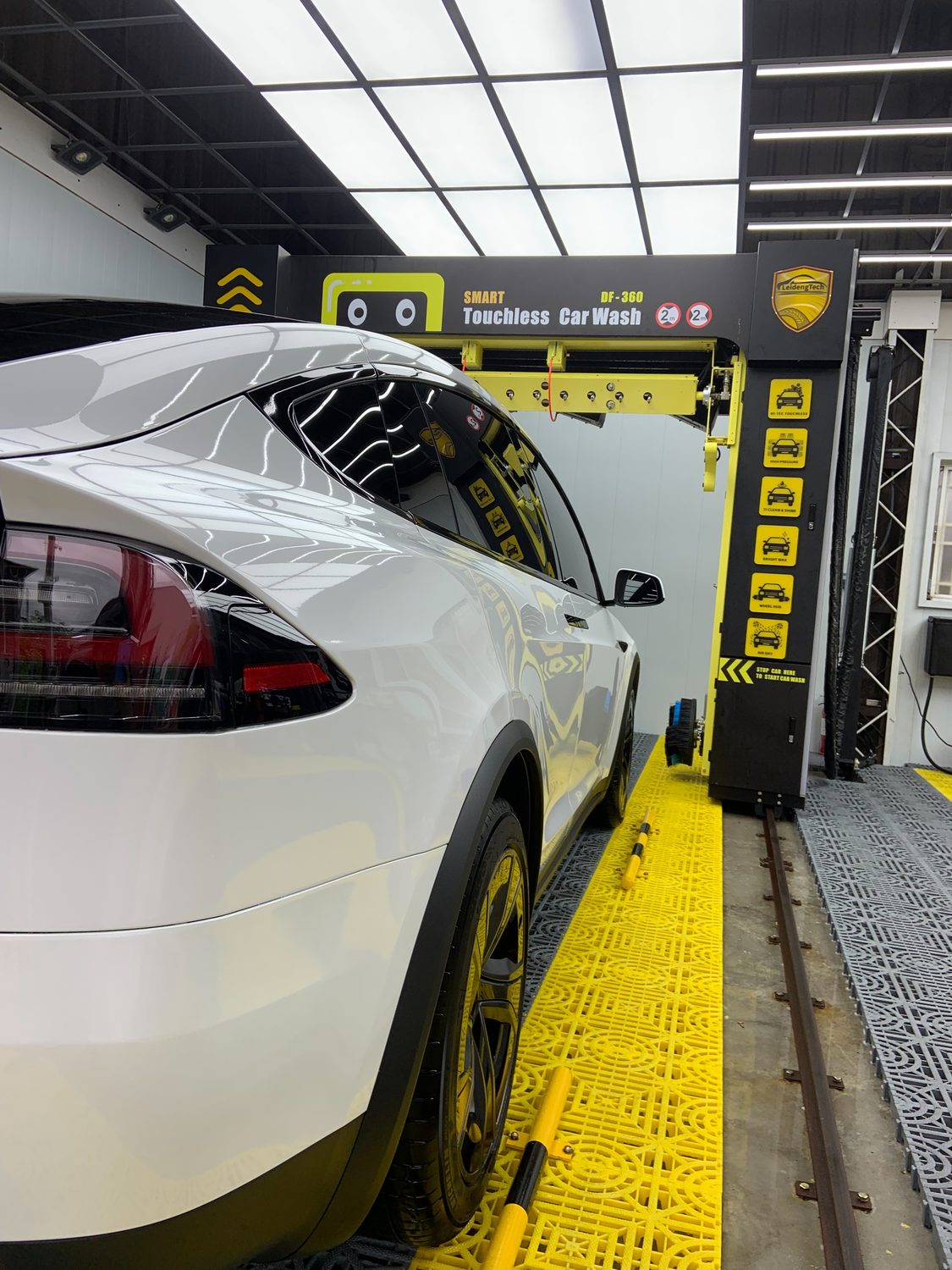
The LD-360 is a gantry system travelling on rails, with top and side assemblies working together and the spray head tracking the vehicle's contour. Nothing contacts the paint at any stage.
| Stage | Step | Function |
|---|---|---|
| 1 | Pre-wash agent | Loosens and carries away surface dust and coarse particulate, reducing load on later stages |
| 2 | Touchless detergent | Primary cleaning. Chemistry and water volume substitute for mechanical action |
| 3 | Wheel brush (option) | Dedicated wheel and rim cleaning where specified |
| 4 | Contour high pressure | Spray head tracks body contour, clearing residual chemical and soil |
| 5 | Titanium protectant | Lays a protective film on the finish — gloss, slickness and water beading, applied inside the cycle rather than as a separate process |
| 6 | Air dry | Top and side drying, minimising water carry-off |
Two selectable wash programmes allow the cycle to be matched to site throughput and quality requirements.
| Model | LD-360 — contour-tracking gantry touchless car wash system |
|---|---|
| Configuration | Rail-mounted gantry, reciprocating travel, top and side assemblies |
| Contact | None at any stage |
| Programmes | Two selectable wash cycles |
| Power supply | Three-phase five-wire, 380 V, rated current 80 A |
| Max vehicle width | 2.3 m including mirrors |
| Max vehicle height | 2.0 m including roof-mounted accessories |
| Max vehicle length | 5.3 m |
| Ground clearance | Minimum 10 cm |
| Options | Wheel brush, underbody rinse, parking guidance LED display |
| Voice guidance | Mandarin / English |
| Operating data | Rolling 12-month record of wash count and operating history |
Configuration is specified against site conditions. Detailed drawings and utility requirements provided during technical review.
Fuel stations and express formats run on different arithmetic: cycle time short, water use low, operation simple, cost per vehicle controlled. Brush systems win on all four.
The reservation has always been paint damage — an impression earned by older machines with hard brush material and detergents that cleaned but did not lubricate.
Our approach addresses the friction directly. The microcapsule coating shampoo lays down a film on the body during the wash, providing lubrication and protection. The brush travels on that film rather than on the clear coat — which protects the vehicle and extends brush life at the same time.
Cycle time is materially shorter than touchless. On a forecourt, throughput at peak hour is the revenue line.
Mechanical action handles bonded soil, road film and bird etching in ways chemistry alone struggles to match.
No need to substitute volume for agitation. Cost per vehicle drops accordingly — and compounds over a year.
Single-step chemistry finishes with gloss, slickness and water beading. No second process, and a service tier you can price.
| Consideration | Touchless (LD-360) | Brush |
|---|---|---|
| Paint contact risk | Structurally eliminated | Reduced by lubricating film |
| Water demand | High — check site supply first | Moderate |
| Cycle time | Longer | Shorter |
| Typical customer | OEM prep, delivery centers, imported and premium vehicles | Fuel stations, express wash, fleet volume |
| Chemistry | Three-step | Single-step |
Neither is better. They serve different businesses. See how the chemistry differs →
Specifications only go so far. Our Taichung demo center runs live equipment, and we can walk you through the numbers for your site.